The 3 root causes of Architectural Technical Debt: Why they keep showing up
Dec 02, 2025
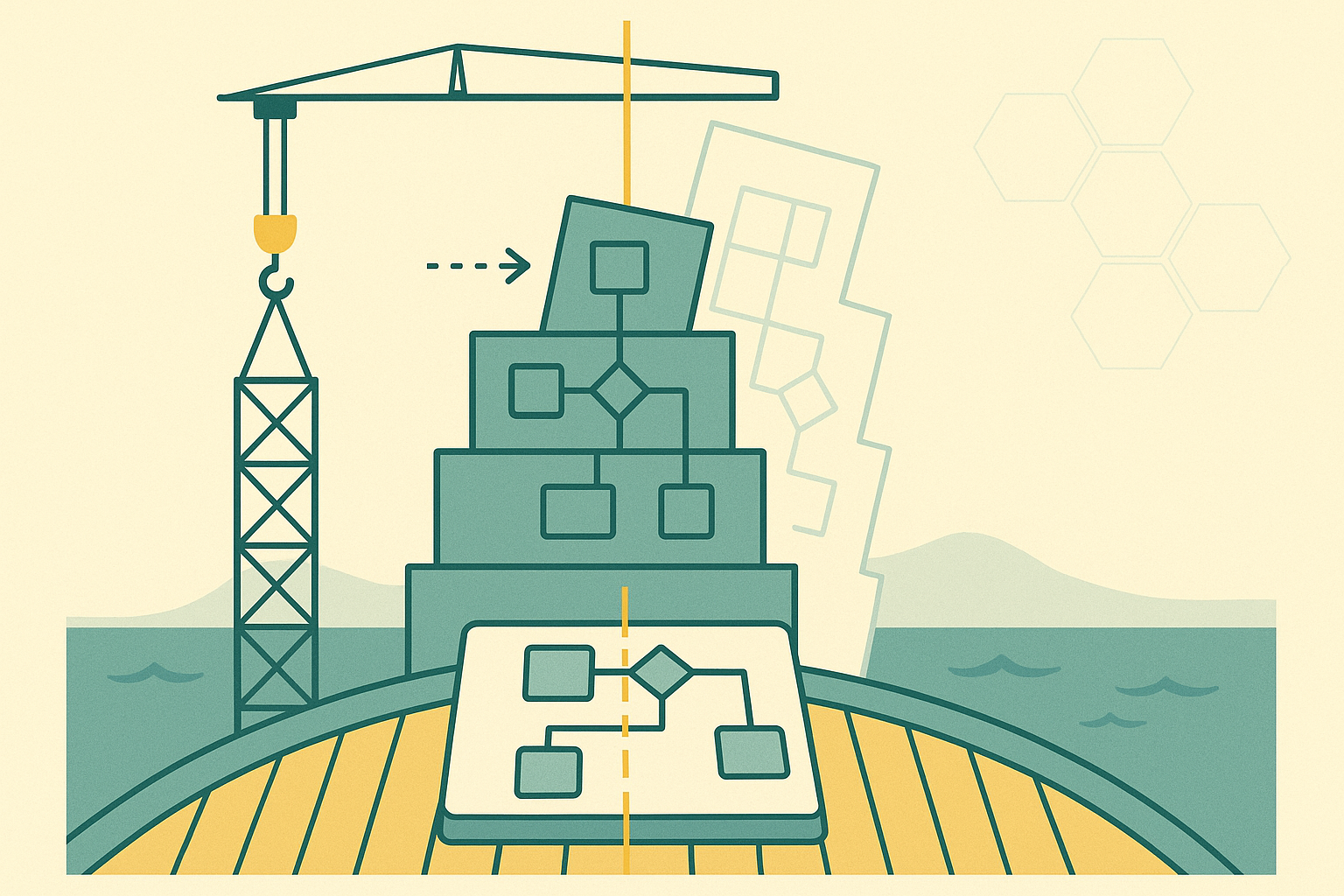
If you build software long enough, you eventually learn that Architectural Technical Debt doesn’t appear out of nowhere. It isn’t the result of a single bad decision or a single rushed release. Instead, it creeps in slowly, shaped by pressures and constraints that influence the system long before a design document is written or a diagram is drawn.
Not because teams are careless, not because architects don’t know what “good” looks like, but because certain forces inside every organization quietly shape the architecture long before anyone draws a box or writes a line of code.
Across teams, industries, and technology stacks, three root causes consistently show up. And understanding them is the first step toward managing architectural debt intentionally rather than discovering it when it’s too late.
Time pressure: the fastest path to bad systems and slow teams
It always starts with urgency. A deadline moves. A customer escalation appears. A crucial feature becomes must-have instead of nice-to-have.
And suddenly, the architecture becomes the thing everyone plans to fix “right after this release.”
Time pressure is the most common and most powerful force behind Architectural Technical Debt. Under tight timelines, teams naturally optimize for output. Shortcuts get taken, prototypes become permanent, and architectural improvements get postponed. The system keeps moving forward, but the foundation underneath it doesn’t get the same attention.
This creates a familiar pattern: fast now, slow later. Every shortcut adds friction. Every delay adds pressure. And every new wave of pressure makes it harder to invest in the architecture that would reduce the pressure in the first place.
Architectural debt isn’t born from bad decisions, it’s born from necessary ones made under these constraints.
Architecture that no longer fits its world
Even if you design everything exactly right today, that architecture will eventually become wrong. Not because the design failed, but because reality changed.
Your system evolves. Your customers evolve. Your scaling needs evolve. Your integrations evolve. And unless your architecture evolves with them, it slowly drifts out of alignment with reality.
Architectural drift is quiet. It doesn’t break builds. But it slowly breaks your ability to move:
- A framework that hasn’t been updated because "it still works."
- An MVP architecture that survived far beyond its intended lifetime.
- A domain model that reflects how the business worked three years ago.
- A set of services that were decomposed correctly, for a very different set of constraints.
No one chooses this drift. It happens when teams have more urgent work than architectural work, and when the environment evolves faster than the system designed to support it. Over time, the cost of change increases, not because the team lost discipline, but because the architecture lost relevance.
Knowledge gaps and inadvertent architectural decisions
Not all architectural debt comes from time pressure or outdated assumptions. Some of it comes from something subtler: how teams understand or misunderstand the architecture itself.
This isn’t negligence. It’s a knowledge problem. And knowledge problems compound.
Once misunderstandings enter a system, they propagate. They shape new features, new services, even how new team members learn the system. Without shared architectural intent, developers make reasonable decisions based on local information that accidentally conflict with global structure. Documentation goes stale. Tribal knowledge grows unevenly. The architecture becomes a moving target that only a few people truly understand.
In that environment, debt doesn’t need to be intentional to appear. It emerges from the natural variation in how people interpret boundaries, abstractions, and design rationale.
Good architecture depends on shared understanding. Without it, even well-intentioned changes accumulate misalignment over time.
The forces you can’t eliminate, but can manage
Time pressure prioritizes delivery over design, environmental drift outpaces architectural evolution, and knowledge gaps lead to well-intentioned but misaligned decisions.
None of these forces can be eliminated. They’re part of building software in the real world. But they can be made visible, explicit, and manageable.
That’s where modern architectural practices and tooling make the difference. Clear decision records, shared models, collaborative design tools, and ongoing architectural review all turn invisible forces into visible ones. They allow teams to recognize architectural debt early, understand its causes, and act before it becomes a barrier to progress.
Architectural Technical Debt isn’t a failure of discipline. It’s a natural byproduct of delivering value. The key is making sure it’s managed deliberately, not discovered accidentally.
Sources
(Used for analysis only; not referenced in the article text.)
- Verdecchia, R., Kruchten, P., Lago, P., & Malavolta, I. Building and evaluating a theory of architectural technical debt in software-intensive systems (2021).
- Rios, N., Mendonça, M., Seaman, C., & Spínola, R. The most common causes and effects of Technical Debt: First results from a global family of industrial surveys (2018).